
For diving fins are an integral part of how we move around underwater they are one of the most efficient ways to propel ourselves with all of our gear on. While there is no perfect science for finding fins this will cover some considerations in determining which fins will best suit your diving style. This will be more handy for divers looking for their first set of fins but could also be helpful for divers looking to replace an old pair of fins.
First consideration: full foot or open heel?
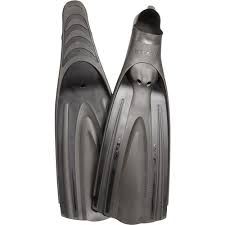
Full foot fins are generally regarded as snorkeling fins but are often used as diving fins for warm water. They are usually a bit smaller than traditional fins, use a full foot pocket with heel, and usually are a bit lighter and cheaper than open heel fins. These are a good option for someone who only plans on doing warm water diving, they will not keep your feet warm enough for cold water diving. The sizing for these fins usually is a range of shoe sizes (7-8, 9-10, 11-12 etc…) this will vary with each brand.
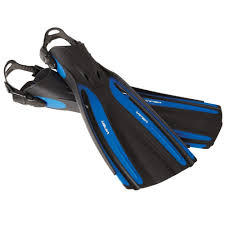
Open heel fins are just what they sound like they have a foot pocket with no heel and a strap to keep the foot secure. These fins are almost always used with booties. They are generally a little bit more robust in the blade and the foot pocket to accommodate the boot, and can cost a little more. The open heel fin is the ideal fin for diving because of its versatility, despite the extra weight can be used in warm or cold water by going to a thinner or thicker boot, feet are also something that we need to worry about overheating while diving so wearing a thick boot in warm water isn’t an issue, except for travel weight. Open heel fins can also have a variety of different straps for the heel ranging from rubber or silicone adjustable with clips for quick disconnect, to silicone, bungee, or spring straps that are usually at a set tension and used for easy removal. This can effect the cost of the fin but can also usually be changed so if you would like to upgrade to spring style straps that is possible. The sizes of the open heel fins is much more general usually ranging from XS to XL but with the adjustable strap or spring strap able to accommodate a wider variety of foot sizes.
Second Consideration: Comfort.
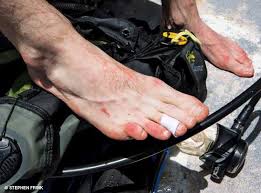
This is the most import step in finding the right fin, comfort should be your primary objective because if its not it will make the experience unbearable like going on a hike in dress shoes. Depending on which style of fin you decide to go with you will be next trying them on, if you are getting an open heel you will need to find a comfortable bootie first. For the full foot fins you want to make sure that when in the pocket your foot is secure and not shifting around, too much space could lead to rub spots that cause blisters. You also don’t want the foot pocket too tight because it may cause cramping in the foot. Consider trying out different brands if possible because their foot pockets and ranges of sizes will differ. For open heel fins it will be a very similar process you want to try on different sizes and make sure that the bootie fills the entire pocket you should not have any gaps when worn, gaps can cause the fin to move and shift on the foot and work less efficiently. For people with small feet make sure that the heel strap is not completely maxed out, sometimes this can still not be enough and the fin can fall off under heavy kicking. Check and make sure that the foot is not experiencing and squeezes or pressure points from the pockets these can become uncomfortable and possibly cause cramping, sometimes due to the heel strap being to tight. For both the full foot and the open heel make sure to extend the leg and kick with the toes pointed to replicate the position your foot will been in while diving this will be a more accurate portrayal of how the fin will feel. Consult with the sales person if you are having trouble determining if it is a good fit, but ultimately you will feel if it is comfortable or not.
Third Consideration: soft or stiff blade?

The softness or stiffness of the fin blade will differ from style to style and most brands will have a range to accommodate all styles of divers. Soft blades have a lot of flex to them and are much easier to kick but do not provide a great deal of power. With the soft blade it will not be as obvious that you are kicking a fin and will feel like a more fluid motion. Softer blades are most efficient with the flutter style kick. These are generally popular with newer divers, divers with injuries, or divers that may not have the best kicking form because they are more forgiving and require less strain. Stiff blades will provide more resistance when kicking and have increased power to the kicks, you will be aware that you are kicking. These fins can be a little heavier and sometimes shorter, becoming very popular in the technical diving space because of the ability to maneuver and push a diver with more equipment. These blades work best with some form of frog kick, but can be efficient when the flutter kick is used as well. This fin is best for divers that are used to kicking and have stronger legs and a good kicking form to maximize their efficiency. There are also a variety of fins in-between soft and stiff, like stated before focus on comfort first if you are a new diver whatever you start with will become your normal.
For divers replacing an old pair of fins, I generally suggest sticking with a fin that is roughly the same stiffness or softness as the last pair. If you have been diving that fin for a while it will be an awkward transition going from soft to stiff and vise versa. If you have not been diving in a while and don’t remember how soft or stiff your fins may have been it shouldn’t matter that much.
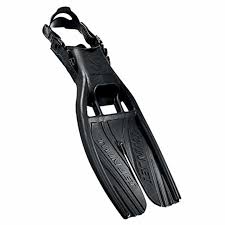
Split fins: these are fins that are just what they sound like split down the middle of the fin leaving two fins instead of a single blade per foot. The split fin is very efficient in how they work channeling the water straight back on both the up and down kick. A majority of the time the split fin is a very soft fin, ideal for divers that may have a injury that could affect their kick. While very popular for a while new fin designs have found ways to maximize efficiency of the fin with out the split, so they are becoming less common.
Fourth Consideration: Color.
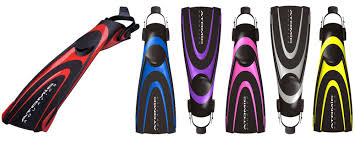
Like all other dive equipment most fins will come in a variety of colors to allow divers to personalize their gear. The color of the fin will not affect its performance, so in reality it doesn’t matter but some divers will choose a particular set of fins over another because of the color option. I recommend agains this but if you need to match your gear have at it. Most fins will offer at least the basic 3 colors (black, blue, yellow) but with new styles more colors are becoming popular (teal, pink, purple etc…) Fins are a great way to identify other divers underwater and having a different color will make you more recognizable. Some more tech oriented fins will often only be offered in one color usually black, but many divers will write their names on them to make them identifiable.

 ScubaPro
 Aqualung
 Mares
Mares Huish Outdoors (Oceanic, Suunto, Zeagle, Atomic, Hollis)
 Training is the most important part of the certification and will be what truly molds the experience of getting certified. It is the personal touch that the instructor provides that will shape your experience and path as a diver. The ability to provide clear instruction and knowledge for the students will leave a huge impact on new divers. This is where the true value of shopping around for your certification will matter. Finding a shop and instructor that are devoted to providing you the student with the best experience possible. As for the price this is the portion of the cost that the instructors themselves are paid from. Some shops will split the cost of classroom/ pool and open water dives, and others will provide an all in pricing. For the aspect of training expect anywhere from $200 to $350 to cover the cost of training (classroom/pool/open water dives).
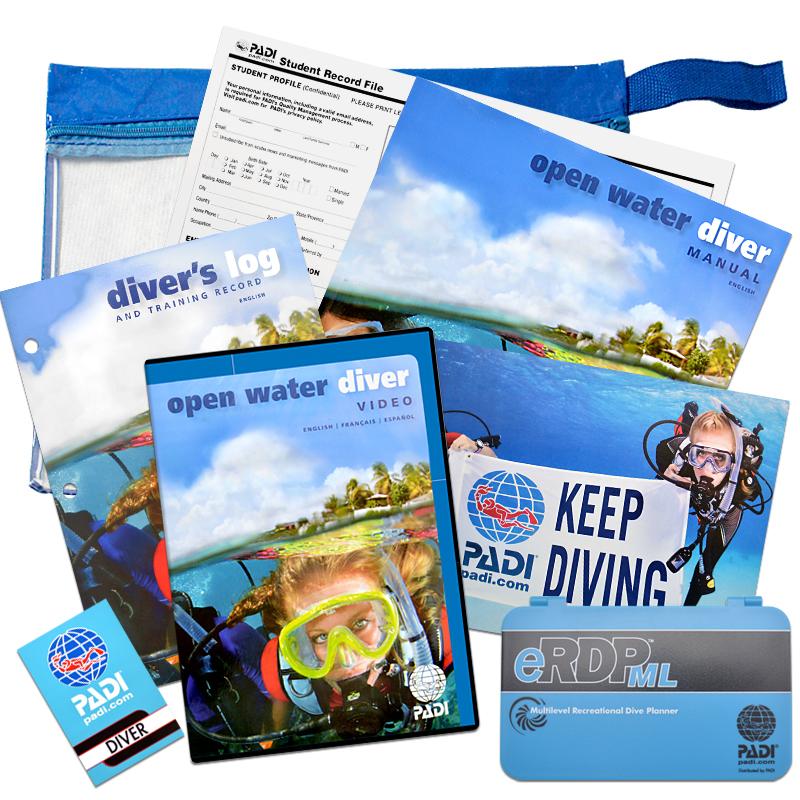 on what format of program you are taking, accelerated programs will be more costly and allow students to complete a majority of classroom portion of the program at home. The three largest and most recognizable agencies Padi, SSI, and Naui materials will range from $75-$189. With these materials they are at this point in time offered as printed books to study or online digital material, SSI provides only digital material, while Padi and Naui offer printed material or digital e-learning.
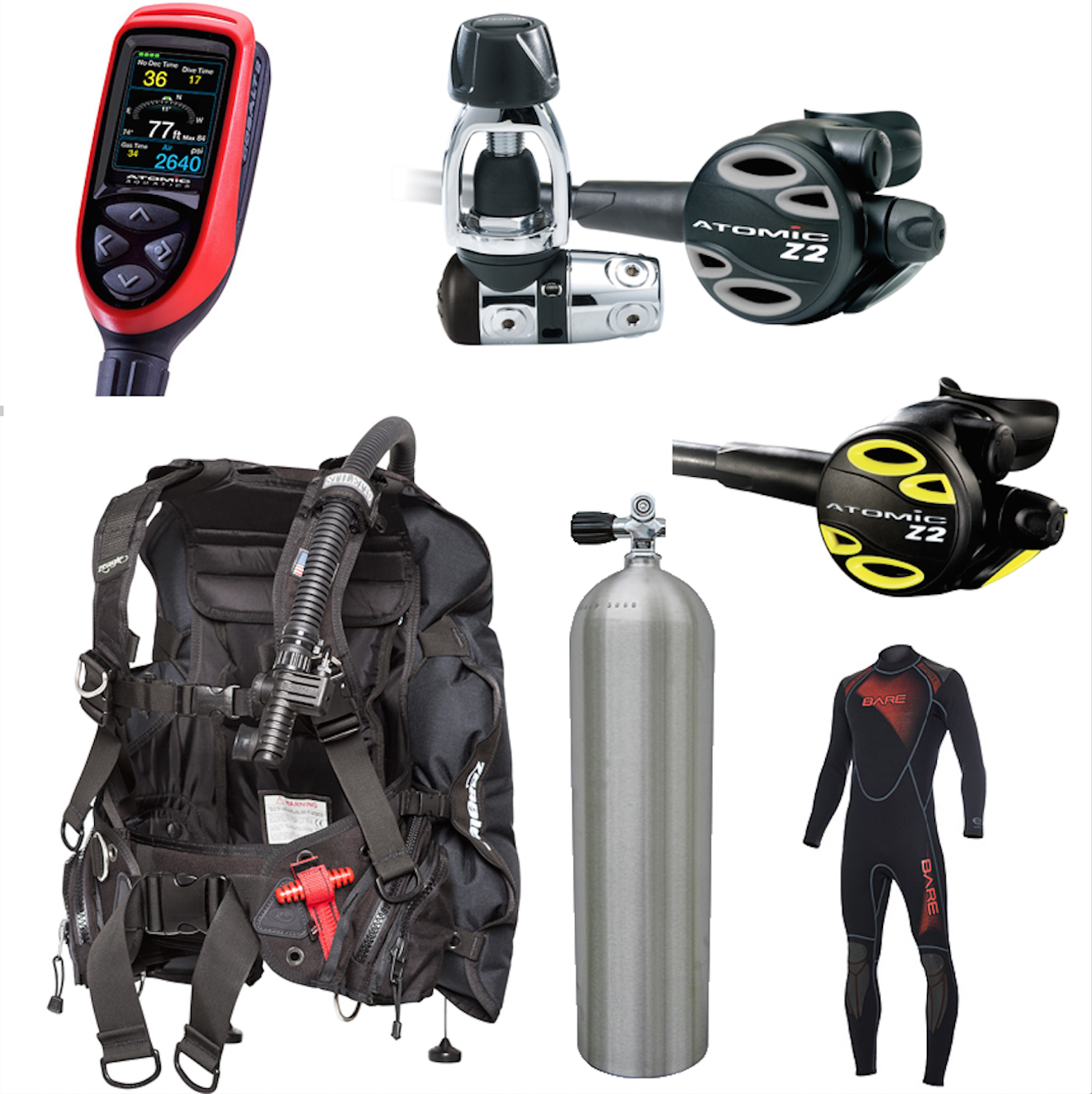 Rentals are something that are absolutely necessary for open water dives unless the new diver has decided to purchase their own BCD, regulator, tanks, weights, and wetsuit. These items to purchases would quickly reach a couple thousand dollars, most new divers will rent these items for their certification, once again rentals will depend on the shop and what kind of gear is needed for the dive, wetsuits will depend on the temperature of the water, the other items will be necessary regardless. Normal expected rental cost for this equipment should be expected around $60-$150. Some shops may provide rental packages that include other gear like mask snorkel, fins that may affect this price.
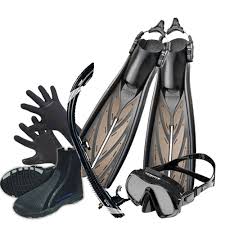 fit gear that will drastically affect your diving experience if they do not fit properly. Once again these items will vary drastically in price and some shops will offer student discounts to help promote the purchase. In general expect at minimum $150 for all of your personal gear and price can go up to as high as $500. Keep in mind this is equipment necessary for scuba, made to a very high quality and made to last when taken care of properly.
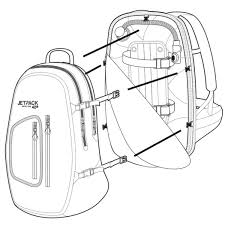 The jet pack is made as a one size fits all bcd that almost completely comes apart, removing the cumber bun weight pockets and storing them in the zip away rear panel that contains the bladder, inflator, tank straps, cumber bun and weight pockets when in the travel mode. In this configuration there is a backpack that can attach to the broken down bcd and can be used as a carry on bag for airline travel. This system does work pretty we’ll and the detachable backpack is very large and has a great amount of storage space. The set up is fairly simple, the rear panel unzips and rolls up secured with a few pieces of velcro the bladder extends beyond the edges, the cumber bun, weight pockets are attached and the shoulder straps are unclipped from the base of the bag and attached to the weight pockets. The most difficult part is threading the cumber bun through the hidden loops and adjusting the shoulder straps for personal comfort lengthening and shortening the nylon webbing. The cumber bun does attach using velcro attaching to itself appears to be surprisingly secure but I can only assume that over time the velcro will give out. But for the time being it appears to be working just fine.
 system from other Oceanic BCD’s instead of the traditional pull from the center out the straps are laced back and use a pul from the sides to center, This is a feature i have seen on many Aqualung bcd’s. The back inflation style makes it a very comfortable dive and uses high quality durable materials that dry relatively quickly. The materials never felt over saturated with water leaving me wondering if it had dried fully before packing. The last thing I am very fond of is the backpack, this thing is great. Weather it is attached or detached this thing has a ton of space, pocket for laptop, many interior mesh pockets for storage of small items, two exterior pockets, straps on the sides great for sandals or beach towels, and zips completely open which can be nice when you are unpacking or looking for something in the bag.
 feel like no matter how much i play with the adjustments that I cannot get it to sit perfectly for me because I have a short torso. I have also found that the placement of the deflator is just not right for me I find my self having to adjust my body positioning more while diving to deflate. This could be because of the length of the bcd and how it fits my body or just that I am so used to my primary bcd I need more time to adjust. Another small issue I have is the weight, for a travel bcd the jetpack is a little heavy, about 6.25 lbs which is lighter than a traditional bcd but also heavier than most lightweight travel bcd’s sitting somewhere in the middle. The salvation for this issue is that it packs into a backpack and can be used as a carry on so weight is not as much as a factor in the long run. My final issue is with the placement of the tank strap, I understand that for the length of the bcd it has been set low to prevent swing of the tank but I wouldn’t mind an additional strap a little higher for a more secure hold, it does have a valve strap that can aid in some stability but I personally prefer a double strap system.
 Submerged Travels