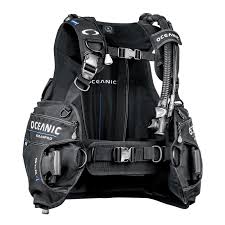
The Oceanic Ocean Pro BCD is what would generally be considered as an entry level BCD. This BCD has been in the Oceanic line for quite a while although it may have gone by a few different names, it has largely stayed the same with each new generation adding convenient features. Now the true name of the BCD is the Oceanpro 1000D previous generations also went by just the Oceanpro, and although it was an attempt to break from this mold I also believe that the Cruise BCD was also the same. If you are on a budget or a new diver looking to get your first BCD the Oceanic Oceanpro bcd is a great starting point if your not ready to make the jump to back inflate.
Lets talk about features:
- This is a jacket style BCD made of denier nylon, which is very common in BCD materials, the great part about this is that if the bcd is punctured it can be patched quite easily with some aqua seal (I have had to do this a few times).
- It has the standard Oceanic Inflator, right shoulder dump and rear dump, all of these additional dumps have pull strings with balls on the end making them very easy to find even with gloves. The attachments for the dumps are also easy to clean with no tools required to remove them which is something I am always grateful for, especially when a student gets sand in theirs.
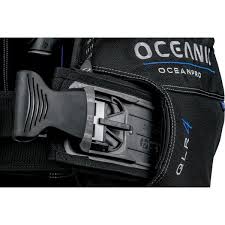
- Oceanic QLR4 Pocket system. This is one the largest differences from other brands which is the quick release weight pocket system. They use a hidden buckle that is behind the pocket to help avoid debris, and a handle that i believe is silicone/plastic to pull and release the system. In my experience with Oceanic BCD’s this is a very reliable system if they are locked in properly and not over loaded beyond their capacity. Because the handles do stick out slightly they can get caught on things like kelp but the buckle system is sturdy enough not to pull free too easily. These pockets can hold up to 10 lbs each for a total of 20 lbs of dumpable weight.
- Storage pockets: as is common with jacket style BCD’s it has two large zipper pockets with moderate pull tabs that make it fairly accessible, a little harder to access with gloves, but like any other jacket BCD how inflated the bcd is will affect the access and storage in the pockets so be careful putting fragile things in the pockets. But plenty of space for a light, slate, reel, or SMB for those that want to have them but not have them dangling off them.
- D-rings, the Oceanpro sports 8 plastic d-rings strategically placed for the most convenient use. I have not encountered any broken d-rings they seem to be sturdy, comparing my much older Oceanpro BCD it has much fewer and I find at times not able to clip things were I want, but the new design has plenty of options.

- Trim Pockets, this bcd like more and more has trim pockets attached to the bladder on the back of the bcd on either side of the tank strap. They each can accommodate 5 lbs for a total of 10 lbs of trim. They are velcro pockets and non dumpable so I suggest being very conservative with the amount of weight you are placing in them, they should not be holding the majority of your weight.
- Adjustable Cumber bun and stomach strap. One of the things that most divers don’t realize is that the cumber bun and stomach straps on most Oceanic BCD’s are adjustable. This is great for bcd’s in rentals that may need to fit a variety of sized divers. It also allows a new diver to easily customize the fit to their personal needs and avoid overly tight or loose straps. The adjustment is behind the divers back so it is best adjusted before the tank is attached.
- Adequate lift capacity. So like many jacket style bcd’s and bcd’s in general the lift capacity is going to depend on the size of the bcd. Smaller bcd’s will have less than larger bcd’s, for the Oceanpro this range from xs to xxl is about 20 lbs of lift to 48 lbs of lift. This could be an important factor playing into your choice of diving, I have seen many times that divers do not take into account the lift of their bcd’s and over load them with weight in their integrated pockets, also forgetting the buoyancy of the tank and finding it impossible to stay afloat at the surface. Keep in mind your exposure suit will add buoyancy but if you take your bcd off at the surface it might not stay there. Be sure to check your weight when diving and avoid overweighting yourself.

- Molded tank cradle/backpack, Most bcd’s will often have some sort of plastic backplate of sorts to give the bcd rigidity and structure for the tank to press up against for securing it. these are light weight usually and often have a handle to make it easier to carry the bcd. On the Oceanpro bcd there is a pad for diver comfort and on the back above the tank strap what I like to call a cheater strap which is used to help set the tank hight when setting it up and an additional strap around the tank valve incase the primary strap comes loose. This is more common in newer bcd’s and a very handy feature for keeping the bcd height on the tank consistent. The base of this cradle is also where the cumber bun and stomach strap are adjusted from.
- The most important feature of course of any bcd and the one that I believe many care most about is the price the Oceanic Oceanpro BCD comes in at $479.95.
Overall I believe that this is a great starting BCD for any diver, it is a reasonable price, has plenty of features, storage and very durable. It can be easily repaired and does not need any special tools to clean in all of those nooks and crannies that might build up salt or sand over time. I have been dealing with these BCD’s for 10 years and wouldn’t have any other BCD as a rental. I can fix almost any issue, at a dive site, the weight pockets are reliable and don’t come loose like some other brands (I find a lot of lost weight pockets almost never Oceanic). So if you are looking for a starter BCD consider the Oceanic Oceanpro it may surprise you.
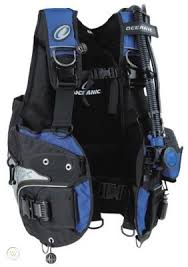
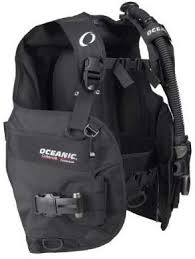

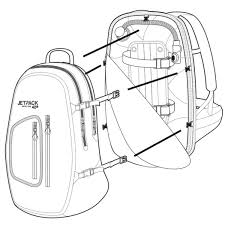 The jet pack is made as a one size fits all bcd that almost completely comes apart, removing the cumber bun weight pockets and storing them in the zip away rear panel that contains the bladder, inflator, tank straps, cumber bun and weight pockets when in the travel mode. In this configuration there is a backpack that can attach to the broken down bcd and can be used as a carry on bag for airline travel. This system does work pretty we’ll and the detachable backpack is very large and has a great amount of storage space. The set up is fairly simple, the rear panel unzips and rolls up secured with a few pieces of velcro the bladder extends beyond the edges, the cumber bun, weight pockets are attached and the shoulder straps are unclipped from the base of the bag and attached to the weight pockets. The most difficult part is threading the cumber bun through the hidden loops and adjusting the shoulder straps for personal comfort lengthening and shortening the nylon webbing. The cumber bun does attach using velcro attaching to itself appears to be surprisingly secure but I can only assume that over time the velcro will give out. But for the time being it appears to be working just fine.
 system from other Oceanic BCD’s instead of the traditional pull from the center out the straps are laced back and use a pul from the sides to center, This is a feature i have seen on many Aqualung bcd’s. The back inflation style makes it a very comfortable dive and uses high quality durable materials that dry relatively quickly. The materials never felt over saturated with water leaving me wondering if it had dried fully before packing. The last thing I am very fond of is the backpack, this thing is great. Weather it is attached or detached this thing has a ton of space, pocket for laptop, many interior mesh pockets for storage of small items, two exterior pockets, straps on the sides great for sandals or beach towels, and zips completely open which can be nice when you are unpacking or looking for something in the bag.
 feel like no matter how much i play with the adjustments that I cannot get it to sit perfectly for me because I have a short torso. I have also found that the placement of the deflator is just not right for me I find my self having to adjust my body positioning more while diving to deflate. This could be because of the length of the bcd and how it fits my body or just that I am so used to my primary bcd I need more time to adjust. Another small issue I have is the weight, for a travel bcd the jetpack is a little heavy, about 6.25 lbs which is lighter than a traditional bcd but also heavier than most lightweight travel bcd’s sitting somewhere in the middle. The salvation for this issue is that it packs into a backpack and can be used as a carry on so weight is not as much as a factor in the long run. My final issue is with the placement of the tank strap, I understand that for the length of the bcd it has been set low to prevent swing of the tank but I wouldn’t mind an additional strap a little higher for a more secure hold, it does have a valve strap that can aid in some stability but I personally prefer a double strap system.
 Submerged Travels