Fun in the Sun and Diving St Thomas
A Day in Vieques
Benefits of El Nino
Limited Access: Diving at Point Lobos
Vision of the Channel Islands
Go With the Flow of the Current
Oceanic Omega 3 Review

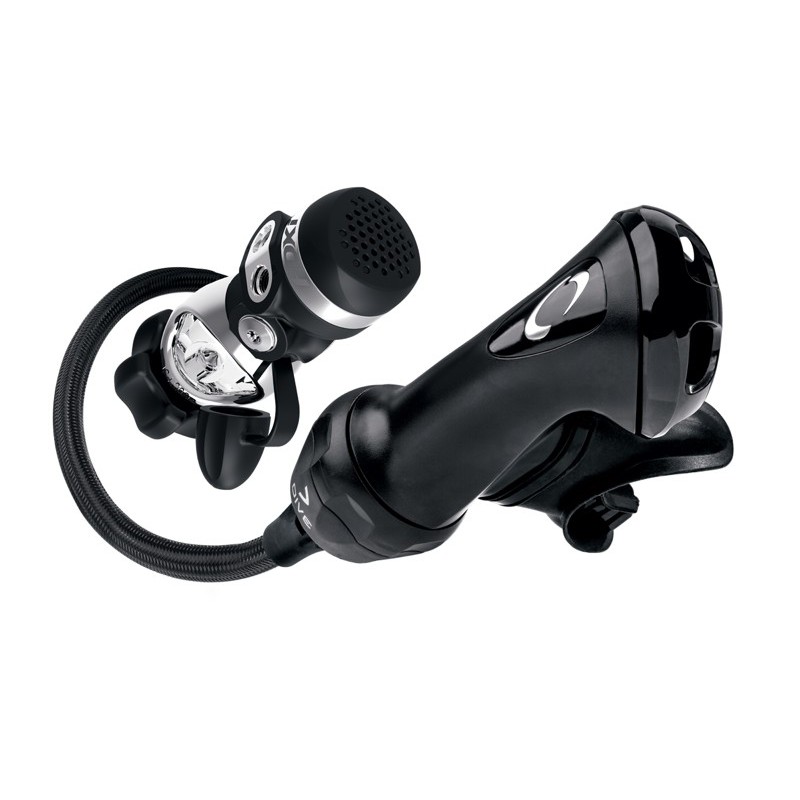
The Oceanic Omega 3 regulator paired with the new FDXi first stage is a bit of the black sheep in the current market. The first thing many people will notice is that it is a side exhaust regulator, but it is so much more than that. The Omega 3 is the 3rd generation of the Omega family, earlier generations the 1 and 2 are still coveted by divers and their simple design makes for easy upkeep and an assortment of customizable options. My first experience with the omega line was a few years ago after my scuba pro second stage fell apart during a dive, in dire need of a replacement and low on funds I found an old Omega 1 at the shop I was working at. The side exhaust was a breath of fresh air, no more bubbles all over my face when I am looking around. The metal servo valve also allowed condensation to build which eliminated dry mouth. So when I heard that Oceanic was preparing to release the new Omega three I began to save up.
With the Omega 3’s sleek design that brings the classic Omega shape into the 21st century. Along with the new design Oceanic also added a pre-dive switch, and pivot to the second stage, reducing free flow that omegas were notorious for, and improving comfort for the user.

The Pros: With the design of this regulator and the use of a servo valve instead of the standard on demand valve, the effort needed to breath is almost non-existent. the side exhaust design reduces the sound underwater because bubbles are no longer rushing past both ears, only one ear. This can take a little getting use to but overall it is a quick transition. The metal servo valve allows for condensation to build inside the housing reducing dry mouth, and the issue of being a wet breather found in the 1st and 2nd generations of the Omega’s has been solved. The pivot on the second stage makes for comfortable position of the regulator, no longer being pulled or torqued when looking around. The pre dive switch is a happy addition to deal with the finicky free flow of the previous generations, a quick twist of the base and you are ready to dive, easy to use wearing even the thickest gloves. The FDXi first stage provides the simplicity and sturdiness of the FDX10 but in a smaller sleeker design. In terms of upkeep, the simplicity of both the first and second stage make for quick turn around times during services, and require minimal parts specific to Omega 3 and FDXi.
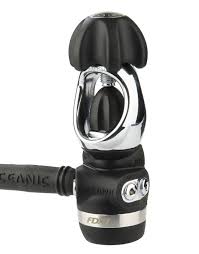
The Cons: Even though this regulator is a very easy breather, there is still a bit of adjustment that is needed to make perfect for each individual diver. There is an adjustment port at the center of the exhaust that with a screwdriver can be adjusted to increase or decrease the inhalation effort, this can take a little bit of time to get it to your own personal setting for comfort but once it is set you don’t have to worry about it. My only real issue with the regulator is the first stage, it works very well but the ports are placed a little to close together so in order to remove one hose you might have to remove them all. If you use a transmitter for your computer it is very difficult to fit a crescent wrench in to secure. My last issue with the FDXi first stage is the yoke frame, it is very broad and makes it so the first stage does not fit all tank valves which can be a little inconvenient.

Overall this is an amazing regulator, it breaths well, it is very comfortable to use and the side exhaust makes for in my opinion a much more enjoyable dive. The Oceanic Omega 3 may not be for everyone but I do Strongly encourage every diver to give this side exhaust regulator a chance because it may just change the way you dive.
Unfortunately through industry connections I have been informed that the Omega 3 has been discontinued, because of diver complaints of it being a wet breather and finicky. These characteristics that divers complained about were staples of the Omega design and what made it so unique. Although this may not be ideal for all divers for some these qualities can be seen as an advantage along with its ambidextrous nature, and welcome the out of the box innovation that the Omega and all generations have incurred. As a diver I will sorely miss this marvel of design and am sorry that other divers misunderstanding of this piece of equipment will call for its discontinuation of production.
Oceanic Omega 3 video review.
Tank You for Asking


Scuba tanks while a very important piece of equipment are often under appreciated. While many divers are taught about tanks in their open water certification the role of a tank is left as the container of air. But in many cases the choice of tank can be as important as choice of BCD or fins. For most divers tanks are something that they might not normally think about, you travel to your destination and the shop provides tanks for you. Some divers might be surprised to find out that there is as much variety in tanks as most other pieces of scuba equipment.

Many divers are unaware of the effects of tank choice has on our diving especially buoyancy and time. Tanks come in a variety of sizes, the size of the take is determined by the volume of air that it is able to hold. A common tank size is 80 cubic feet, but these sizes can vary from as small as 6 cubic feet for a backup pony bottle to as large as 149 cubic foot high pressure tank. It is pretty obvious that the larger tanks will hold more air than the smaller if they are filled to the same pressure, but with the use of different metals and high and low pressure tanks this can also vary. For the most part Aluminum tanks despite the size will be filled to 3000psi, steel tanks on the other hand have a fair amount of variance. Low pressure steel tanks are exactly what they sound like they are rated for a lower pressure, depending on the tank it can range from 1800psi to 2600psi. High pressure tanks (commonly using a DIN valve) fill on average to 3445psi, which is higher than the standard 3000psi of aluminum tanks. What this means is that tanks that fill to higher pressure have more air packed into them than tanks that are the same size that till to a lower pressure. So by choosing tanks that are larger and fill to a higher pressure (my favorite is HP80) you can increase your dive time compared to a smaller tank.
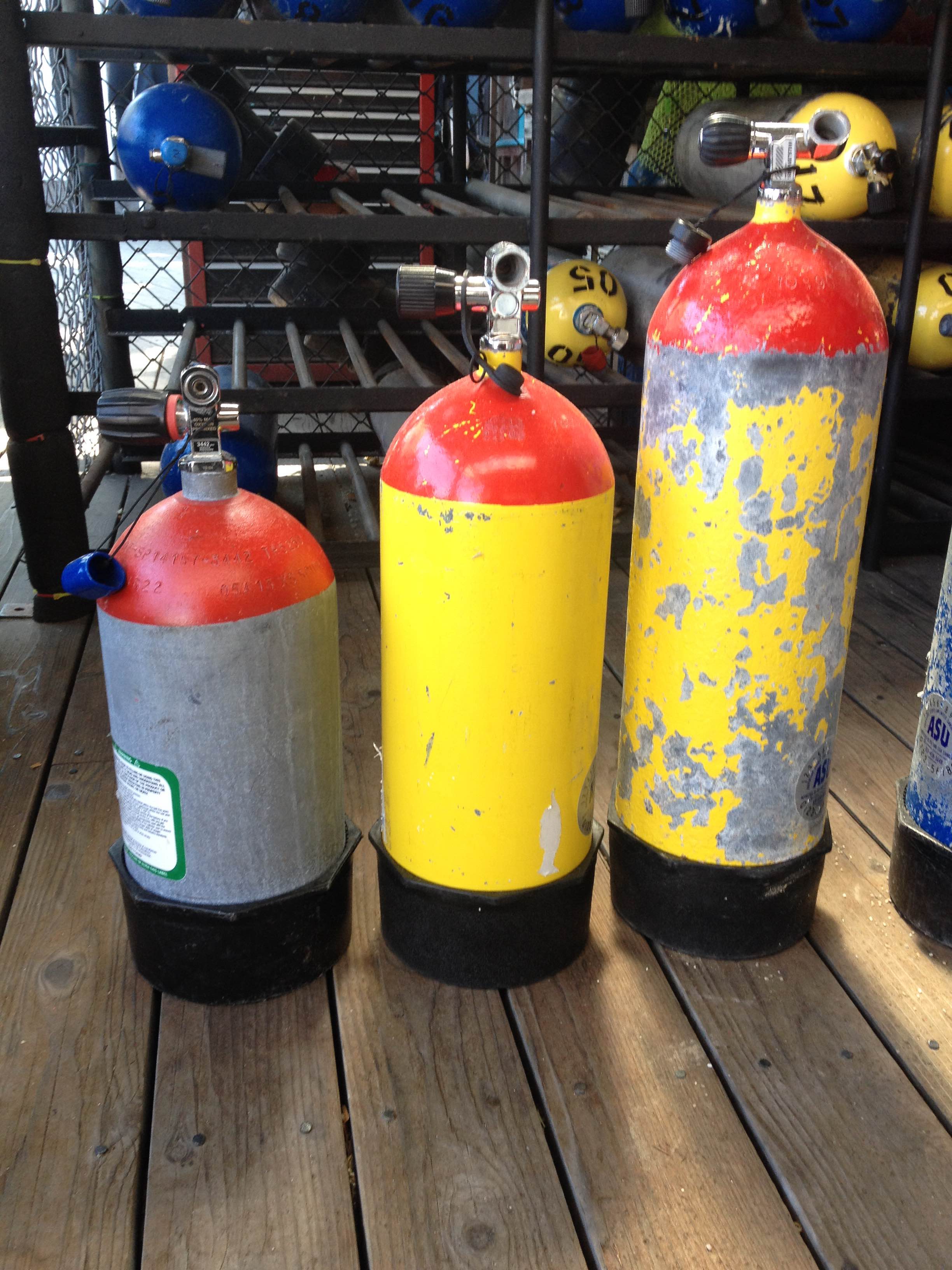
While size of tank might be an obvious way to increase dive time, tanks also greatly influence our buoyancy underwater. With different choices of metal aluminum being a weaker metal and steel being a stronger metal these weights contribute to our buoyancy underwater. Although aluminum is a lighter metal because it is weaker the walls of the tanks are much thicker. This does usually give tanks a greater overall weight when full, when the tank is emptied the is a drastic swing in its buoyancy characteristics. Aluminum tanks while they may vary slightly from manufacturer generally are about 4 lbs positively buoyant when empty or near empty. This means you will be lighter at the end of the dive making it more difficult to complete a safety stop. On the other hand while steel tanks are a stronger metal they don’t require as thick of walls and on average may be 1 lb positively buoyant to 2 lbs negatively buoyant depending on the manufacturer. This means with a steel tank that might be 3 to 4 pounds less lead you will have to add to your weights. The high pressure steel tanks can even be up to 4 lbs negatively buoyant when empty.
So weather or not you are buying a tank or renting a tank it is important to know how it is going to affect your dive, weather its is going to affect the duration or your buoyancy. Be prepared to make adjustments as necessary. If your unsure talk to the dive professionals to find out the buoyancy characteristics, and don’t forget to record in your logbook, your weights with each type of tank you use so you never have to second guess again.
No Gloves & No Knives: Welcome to Cozumel

April 4th through 12th I was lucky enough to spend in the beautiful Cozumel Mexico.
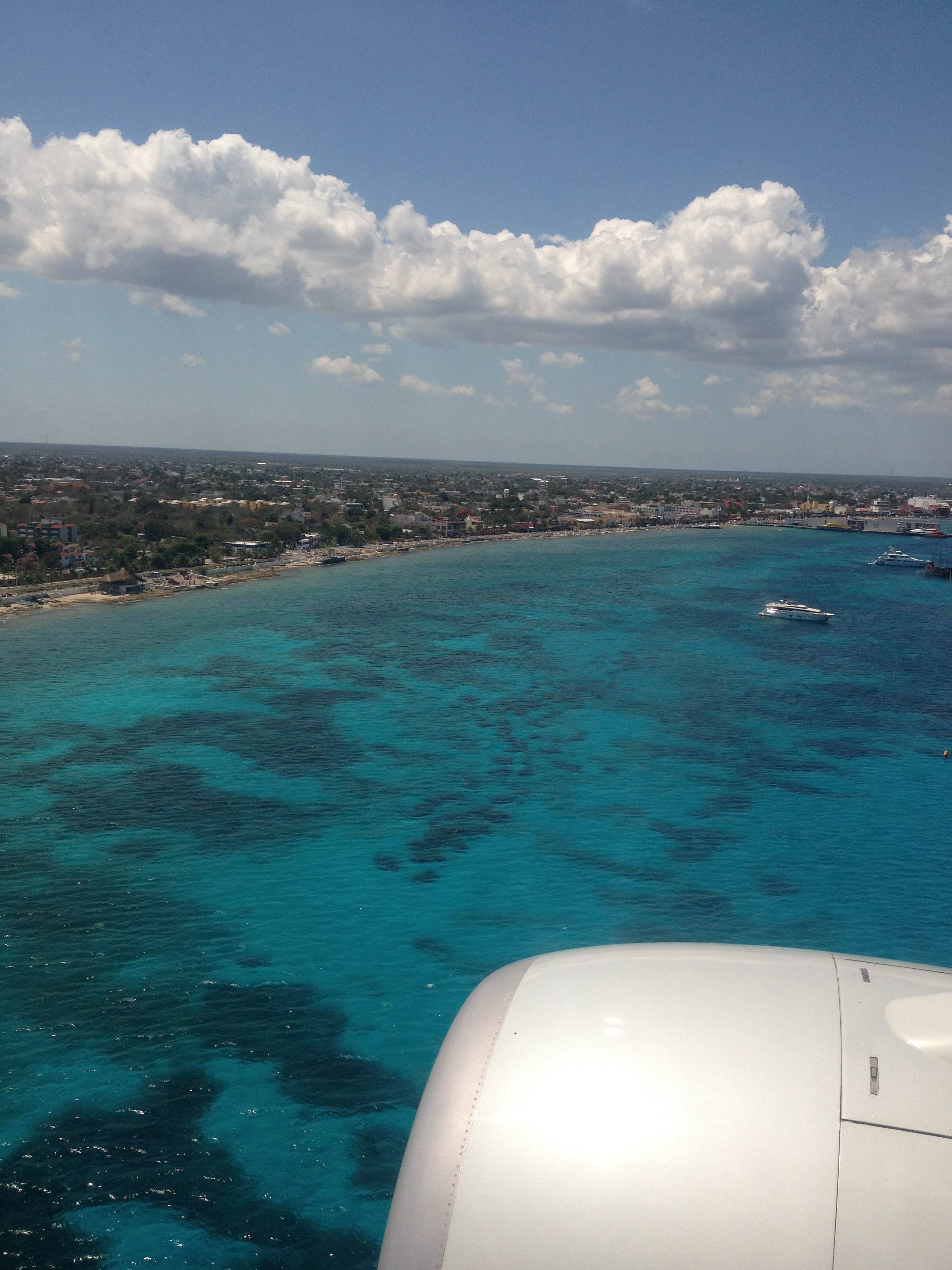 Now Cozumel is one of those dive destinations that almost all divers have heard of, if is famous for its walls that reach extreme depths down to 6000 ft, and of course the drift diving. For those that are not familiar with Cozumel it is an island off the coast of Cancun and Playa Del Carmen, it is well known for the stronger than average currents that whist divers gently over the reef. Cozumel has an abundance of fish and creatures to see and on this particular trip there were no shortage of turtles, a common favorite among divers. The crystal blue water makes it deceptively simple to wonder a little farther from your group and need to play catch up. Truly a divers paradise.
 The Highs: For me being a cold water diver the temperatures in Cozumel were a breath of fresh air, fairly consistently 79 degrees Fahrenheit. The currents made it possible to average hour long dives full of reef structures teaming with life from the smallest corals to some of the most massive groupers. We were fortunate enough as a group to have guides that did their best to ensure we were not in the hoard of cruz ship divers. The walls that seemed to reach into the depths of the earth along the walls provided a ever deepening blue.
The Lows: In reality these tend to get a little nit picky because the trip was amazing, but some of this will help prepare divers for going to Cozumel in the future. First of all Cozumel made up of primarily marine protected area, this means that there are strict guidelines on diving. Some of these strict rules include no gloves or knives. The concept of no gloves is relatively common and is used as a deterrent from touching the reef, but the no knives was new to me and i could’t quite understand why. Cruz ships are also a common sight while in Cozumel, and we were told by some of the instructors that during the busy season there can be up to 12 cruz ships in a day. what this means is there is an overcrowding of the reefs, manny divers and also the possibility of less skilled divers affecting the visibility through poor buoyancy control. This large number of divers also makes it difficult at times to keep track of your group during the  dive.
dive.
Overall Cozumel is a phenomenal destination for diving that all divers should have on there list of must visit locations. Not only is there amazing visibility, cool swim throughs, walls, and a variety of aquatic life to see. There is drift diving which can be a game changer, bottom time is increased because of the reduction of effort to move through the water and hour long dives can be easily achieved for those who have good air consumption.
 Submerged Travels