This has been the great debate for many new underwater hunters, which is the best option? The truth is each has its own pros, cons and situations where they are the optimal choice. Spearguns and pole spears both offer a variety of options that can help broaden the effectiveness or specificity in hunting situations. This is to help any new or old spearo determine which is going to be the best option for their hunting, covering more broadly the overall benefits of each and not getting into the nitty gritty of the different styles of each.
Pole spears:
Pole spears are often the first experience that many spearo’s have with hunting. It is a very simple tool with a long pole or shaft with a tip of some sort and band at the other end to generate momentum. Some people may refer to a pole spear as a Hawaiian sling which is different from a pole spear. The Pole spear is used by the user holding the band stretched along the shaft by the user with their hand (one handed operation) while a Hawaiian sling has a handle or grip that the shaft is held by and the user uses two hands to operate. Polespears are generally more common to encounter unless you are in an area that does not allow spearguns then the likely hood of seeing a Hawaiian sling might be slightly higher.
The Pros:
- Less expensive: the cost of most Pole spears will be less than that of a speargun
- More compact: while the length of most polespears is greater than spearguns, many pole spears break down/ collapse into smaller pieces making for easy transport.
- Simple to use: little practice needed to start shooting fish pull the band tight point it at a fish and let go, just make sure your close enough to hit it.
- Multiple shots in quick succession: because of the simplicity of the pole spear if you miss your fish and it is still hanging around you generally have enough time (depending on your breath hold) to attempt another shot.
- Easy to unload: something you don’t really appreciate until you have been diving with a speargun with cold hands.
- Less parts: because of the simplicity there are basically 3 parts to a pole spear 1. shaft 2. band 3. tip. Its very easy to determine if there is an issue with one and replace it.
The Cons:
- Limited range: for the most part your killing range is about what you can touch with the end of the spear.
- Hand fatigue: this is something most people don’t realize until it happens to them, holding a loaded pole spear takes some hand strength and at the end of a diving session there may be some fish that get away because either it wasn’t fully cocked or just unable to properly release.
- Lost Fish: this will largely depend on the tip but most pole spear divers start with what is known as a paralyzer tip, this is a great tip but the barbs are usually smaller and once the fish has been hit forward pressure needs to be kept on the fish to prevent it from coming off.
- More difficult to maneuver: because of the long length of the pole spear (especially in areas with kelp) it can be more difficult to make tight turns or swing around to take a shot on a fish.
Spearguns in my mind are very romanticized in spearfishing and rightly so because they are the optimum tool for the job. The thought of being underwater and stalking your fish then pointing the speargun and pulling the trigger as the bands release and send the shaft flying at the fish to stop it dead in its tracks are what many spearo’s fantasize about. Like polespears there are to many different styles and configurations of guns to completely cover them all so this will be a very broad focus (obviously some of these issues can be mitigated with different set ups) but this is the short answer to the question.
The Pros: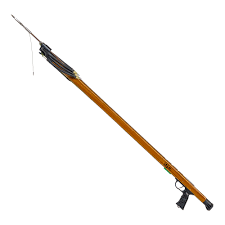
- Longer range: because the shaft can be held under tension more bands can be used to propel the smaller shaft that is attached to the body of the gun.
- More power: once again more or larger bands can be used to give the gun more power in propelling the shaft.
- More maneuverable: because of the power in a smaller size (overall length) it is much easier to maneuver a speargun underwater and make quicker turns to take a shot.
- Floppers: most spearguns come standard with a shaft that has some kind of tip that uses a flopper or floppers depending on the style of shaft, these are wings that once they have passed through the fish prevent the shaft from coming back out unintentionally. Much more reliable than a barbed paralyzer tip.
- You are going to keep more fish that you hit: because of the increased range and power along with the floppers it is more likely that when you hit a fish you will keep it (you can lose fish with a speargun but less likely)
- No hand fatigue: because you are not physically holding the bands under tension spearguns are much easier on the hands and fatigue is rarely a problem.
The Cons:
- The Cost: while there is a wide range of prices for spearguns generally they are going to be more expensive than a Polespear.
- Hard to get multiple shots on a single dive: because the speargun has to be loaded ( shaft locked into the trigger mechanism, shooting line wrapped and bands pulled back) you generally only get one shot on a fish on a single dive unless you are a quick load or have a very good breath hold.
- Moving Parts: the trigger mechanism and line release are something you have to take care of and make sure are free of salt and grit to avoid miss fires or locked triggers.
- Lots of parts: taking care of the speargun is always the first step to prolonging the life, things will need to get replaced, bands shooting line, tips, snubber. All common things to ware out over time and with repeated use.
- Tangles: sometimes when fish are shot they still have some life in them and can swim and twist around tangling the shooting line in itself or other things rocks, coral, kelp. This takes time to untangle which could cause you to miss a fish.
- Harder to Travel with: although shorter than most polespears, most spearguns don’t break down so packing them for a trip can be more difficult without specialty bags, many places also have regulations on spearfishing and guns may not be allowed. (check local regulations before bringing your speargun or polespear on a trip).
While I am sure that there are other pros and cons to both polespears and spearguns these are the ones that I find to be the most helpful in determining which to purchase. The first step will always be to evaluate your situation, what kind of diving your doing, what kind of fish you are hunting, and your budget, is it better to get a very nice polespear or a cheap speargun. No matter what its the hunter that catches the fish these are just tools we use to collect them.

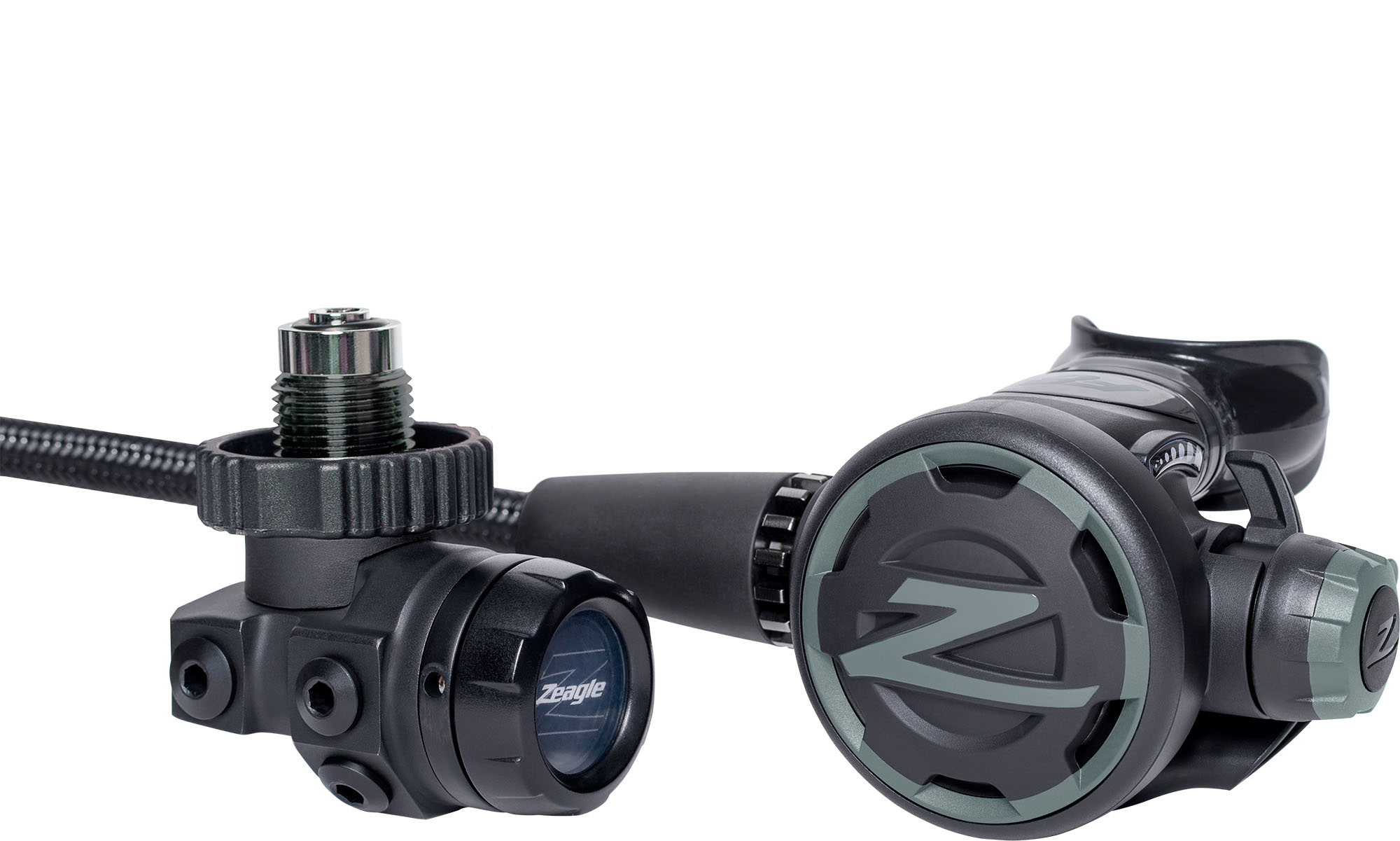 known for their BCD’s they do produce a small line of rugged hard working regulators. These regulators range in price from $329.95 for the Envoy 2 at their entry level, $484.95 for the Onyx 2 for the middle ground, and $629.95 for the F8 as their high end regulator. This is going to focus on the F8 regulator from Zeagle and my experience with this lesser known regulator.
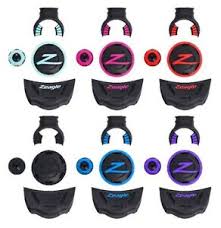 simple classic design takes advantage of the classic look of regulators and the simplistic no extra bells and whistles of the first stage. Zeagle does like to set their regulators apart by having 5 low pressure and 2 high pressure ports on their first stages, 4 of the low pressure ports are traditionally placed with the fifth facing directly forward I assume for more tech/sidemount applications. Zeagle like other companies has adopted the usage of color kits to personalize the regulator with an assortment of colors from standard blue, and pink to purple and red. These kits are in my opinion a little over priced but will make the regulator stand out replacing the purge cover, adjustment knob and exhaust cover.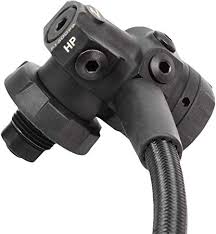


 ScubaPro
 Aqualung
 Mares
Mares Huish Outdoors (Oceanic, Suunto, Zeagle, Atomic, Hollis)
 Training is the most important part of the certification and will be what truly molds the experience of getting certified. It is the personal touch that the instructor provides that will shape your experience and path as a diver. The ability to provide clear instruction and knowledge for the students will leave a huge impact on new divers. This is where the true value of shopping around for your certification will matter. Finding a shop and instructor that are devoted to providing you the student with the best experience possible. As for the price this is the portion of the cost that the instructors themselves are paid from. Some shops will split the cost of classroom/ pool and open water dives, and others will provide an all in pricing. For the aspect of training expect anywhere from $200 to $350 to cover the cost of training (classroom/pool/open water dives).
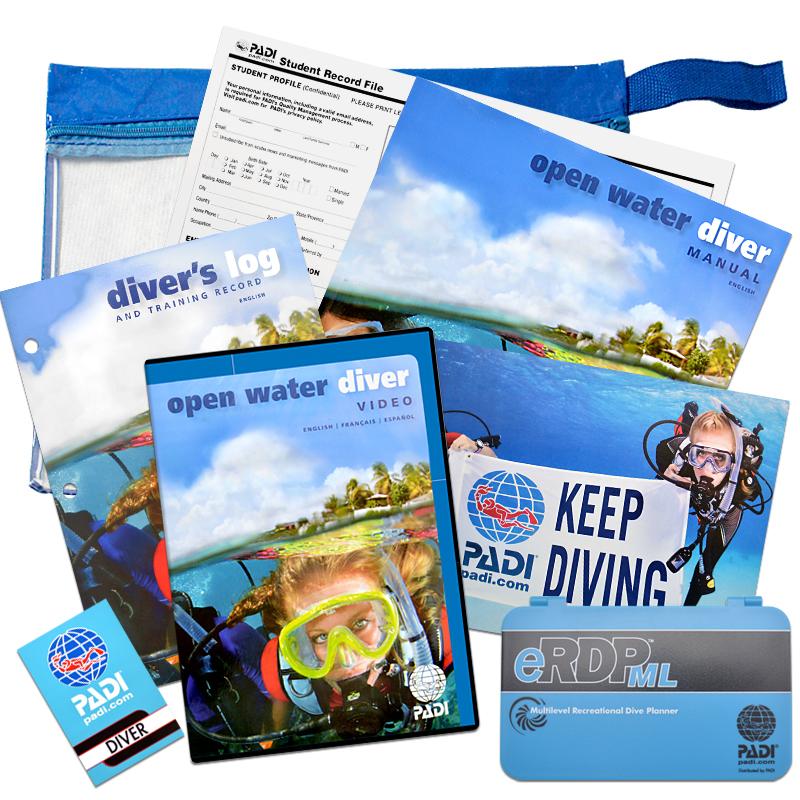 on what format of program you are taking, accelerated programs will be more costly and allow students to complete a majority of classroom portion of the program at home. The three largest and most recognizable agencies Padi, SSI, and Naui materials will range from $75-$189. With these materials they are at this point in time offered as printed books to study or online digital material, SSI provides only digital material, while Padi and Naui offer printed material or digital e-learning.
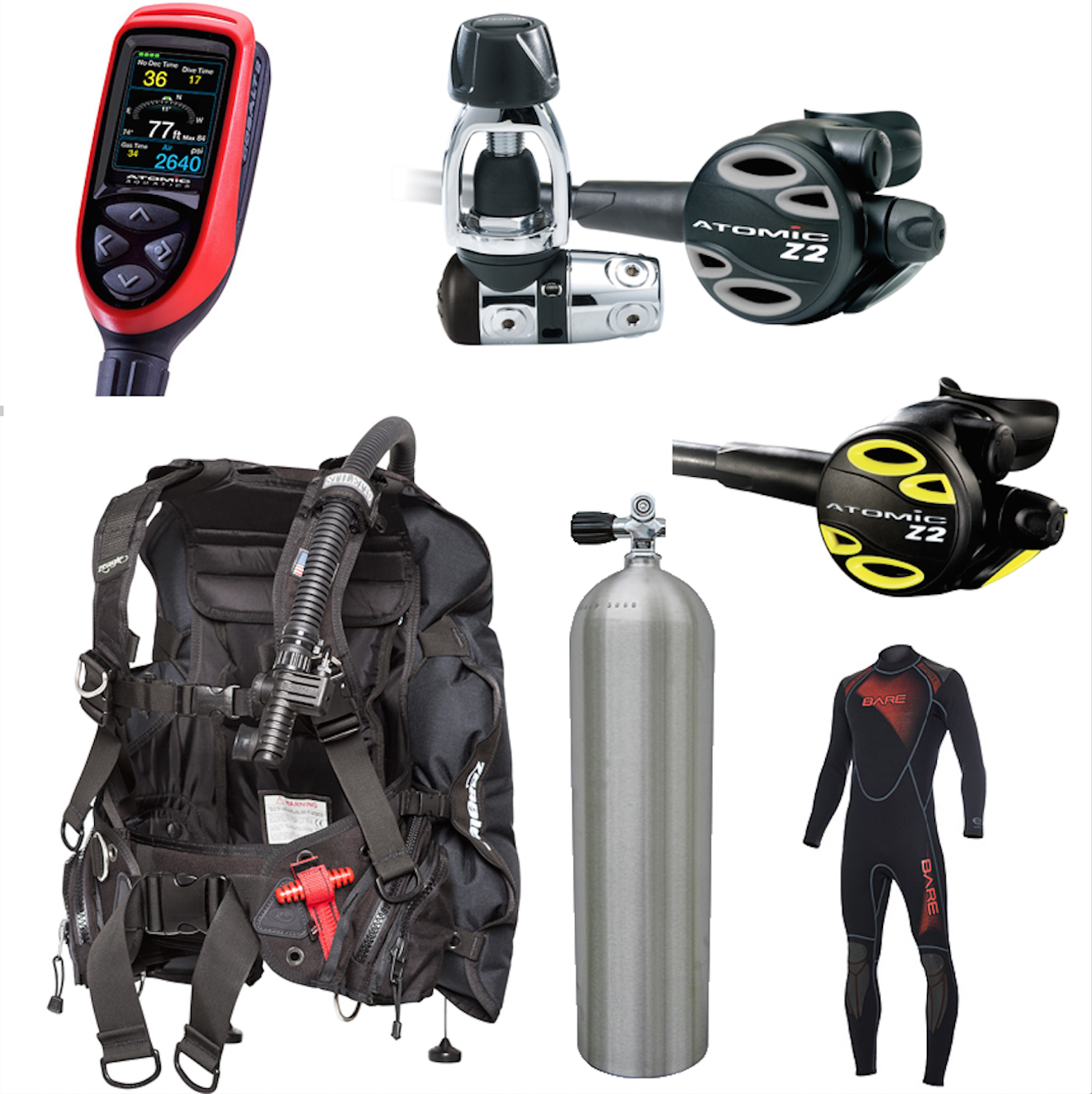 Rentals are something that are absolutely necessary for open water dives unless the new diver has decided to purchase their own BCD, regulator, tanks, weights, and wetsuit. These items to purchases would quickly reach a couple thousand dollars, most new divers will rent these items for their certification, once again rentals will depend on the shop and what kind of gear is needed for the dive, wetsuits will depend on the temperature of the water, the other items will be necessary regardless. Normal expected rental cost for this equipment should be expected around $60-$150. Some shops may provide rental packages that include other gear like mask snorkel, fins that may affect this price.
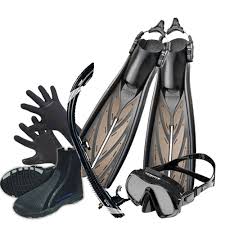 fit gear that will drastically affect your diving experience if they do not fit properly. Once again these items will vary drastically in price and some shops will offer student discounts to help promote the purchase. In general expect at minimum $150 for all of your personal gear and price can go up to as high as $500. Keep in mind this is equipment necessary for scuba, made to a very high quality and made to last when taken care of properly.
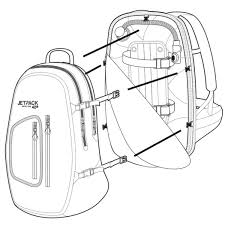 The jet pack is made as a one size fits all bcd that almost completely comes apart, removing the cumber bun weight pockets and storing them in the zip away rear panel that contains the bladder, inflator, tank straps, cumber bun and weight pockets when in the travel mode. In this configuration there is a backpack that can attach to the broken down bcd and can be used as a carry on bag for airline travel. This system does work pretty we’ll and the detachable backpack is very large and has a great amount of storage space. The set up is fairly simple, the rear panel unzips and rolls up secured with a few pieces of velcro the bladder extends beyond the edges, the cumber bun, weight pockets are attached and the shoulder straps are unclipped from the base of the bag and attached to the weight pockets. The most difficult part is threading the cumber bun through the hidden loops and adjusting the shoulder straps for personal comfort lengthening and shortening the nylon webbing. The cumber bun does attach using velcro attaching to itself appears to be surprisingly secure but I can only assume that over time the velcro will give out. But for the time being it appears to be working just fine.
 system from other Oceanic BCD’s instead of the traditional pull from the center out the straps are laced back and use a pul from the sides to center, This is a feature i have seen on many Aqualung bcd’s. The back inflation style makes it a very comfortable dive and uses high quality durable materials that dry relatively quickly. The materials never felt over saturated with water leaving me wondering if it had dried fully before packing. The last thing I am very fond of is the backpack, this thing is great. Weather it is attached or detached this thing has a ton of space, pocket for laptop, many interior mesh pockets for storage of small items, two exterior pockets, straps on the sides great for sandals or beach towels, and zips completely open which can be nice when you are unpacking or looking for something in the bag.
 feel like no matter how much i play with the adjustments that I cannot get it to sit perfectly for me because I have a short torso. I have also found that the placement of the deflator is just not right for me I find my self having to adjust my body positioning more while diving to deflate. This could be because of the length of the bcd and how it fits my body or just that I am so used to my primary bcd I need more time to adjust. Another small issue I have is the weight, for a travel bcd the jetpack is a little heavy, about 6.25 lbs which is lighter than a traditional bcd but also heavier than most lightweight travel bcd’s sitting somewhere in the middle. The salvation for this issue is that it packs into a backpack and can be used as a carry on so weight is not as much as a factor in the long run. My final issue is with the placement of the tank strap, I understand that for the length of the bcd it has been set low to prevent swing of the tank but I wouldn’t mind an additional strap a little higher for a more secure hold, it does have a valve strap that can aid in some stability but I personally prefer a double strap system.
 the first pieces of equipment a diver buys. There are no shortage of mask to choose from with a variety of options, from skirt color, number of lenses, lens colors and strap styles. Despite all of these variations the most important feature of any mask is fit and comfort. The fit and comfort of a mask is a personal decision but these other options for mask style can help narrow down which masks to start with when choosing a mask.


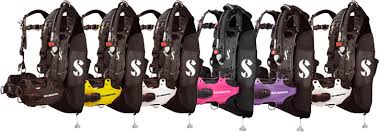
 The Scubapro Hydros BCD is a step in a new direction in terms of what a BCD can be. The scuba pro Hydros has been designed from the ground up using a new material to BCD’s Monoprene. This monoprene material similar to rubber/silicone gives the bcd a grip and flexibility that is unheard of in any other BCD. In addition to the new material the Hydros is made to be a versatile cold water and travel bcd, with removable weight pockets and a simple harness system for travel. This is truly a unique approach to a bcd that will likely have copycats in the near future.
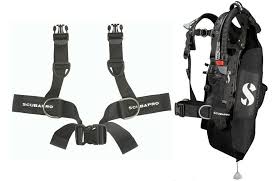 at a almost 11 lbs with the pockets attached. But if you are planning on traveling with the hydros it also comes with a harness system that quickly replaces the pockets with a little practice. Now this harness system is very simple no pockets just webbing a couple D rings and clips, don’t forget you still have the trim pockets on the back of the bladder for weight integration, although it will not be quick release. Despite that this is an easy way to cut significant weight from the bcd when traveling. So for divers looking for a bcd that is ideal for cold water diving and travel the hydros bcd checks all the boxes.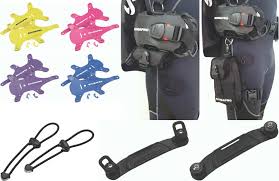
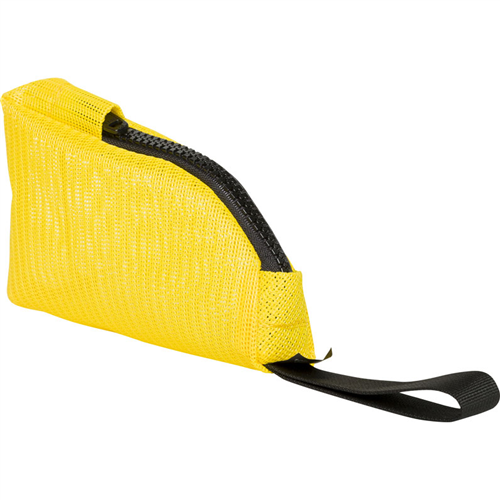
 taking an additional step to clip a pocket around my leg so it does not flap about during the dive for the sole purpose of having additional storage space seems ridiculous to me as a purchase and an optional accessory.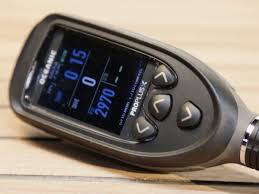
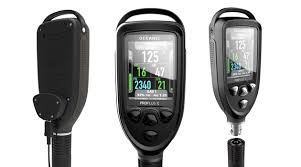 computer that is the complete package. The Pro Plus series has always been a favorite of many divers despite brand devotion because of the large easy to read display popular with aging divers looking to ease the stress of the traditional tiny displays of most computers.
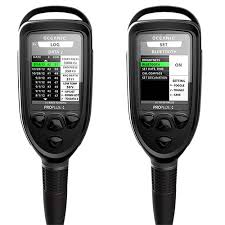 vibrant full color display that is readable in direct sunlight and glare. It is one of the first computers from oceanic to use a Lithium Ion rechargeable batteries. Bluetooth capable and able to download directly to the diver log app with no chords. Finally in my opinion one of the easiest and intuitive menus with 4 button navigation for complete control. Now at this point in time it is standard for high end dive computers with full color screens to have TFT, rechargeable batteries and bluetooth capability. In terms of air integrated console computers the Oceanic Pro Plus X is clearly a trend setter, and the beginning of a new wave of high quality dive computers for divers that want bright easy to read dive computers.
 the Pro Plus computer. While it is launching oceanic into the high quality dive computer the Pro Plus X is priced a little high compared to comparable computers on the current market, it would be a much better selling computer if it were priced around $1000 dollars and would be an absolutely worth while purchase at that price especially as an upgrade for the Pro Plus 3.



 Submerged Travels